5 Effective Ways to Improve your Home’s BER Rating

It is no secret that Ireland is under pressure to cut emissions and negate the adverse effects of climate change.
With residential homes accounting for 25% of all energy used in Ireland, it is important that we consider ways to make them more energy-efficient and improve their BER ratings.
In this article, we will take a look at what a BER rating is in more detail and highlight some of the advantages of having a strong BER rating, before giving our best practice methods for raising your home’s rating.
As mentioned, a BER rating ranks your house’s energy efficiency on a scale of A-G, where A-rated homes are considered to be the most efficient, and G-rated homes the least.
It is now a legal requirement to provide a BER rating for any home being sold or leased in Ireland.
Additionally, any new dwellings being constructed must now have a BER rating of at least A2.
A BER rating must be conducted by a registered BER Assessor, provided by the SEAI, and when completed is valid for a maximum of 10 years.
A Building Energy Rating (BER) is determined by the quantity of energy a home needs for:
The calculation itself is made using the Dwelling Energy Assessment Procedure (DEAP).
Taking into account the energy requirements listed above, as well as the number of inhabitants and other factors such as home insulation, the DEAP works out the amount of energy being lost by a house and assigns it a subsequent rating.

The higher your BER rating, the more energy-efficient your home is which in turn presents a whole host of benefits.
Your home insulation has a major impact on energy efficiency.
If you find yourself constantly cranking up the heating in winter, it is likely that your insulation, or lack thereof, is struggling to retain heat.
According to Electric Ireland, a G-rated home will on average cost ten times more to heat than an A-rated home.
Insulation is the key driving force behind this stark contrast.
In addition, investing in insulation will enable any further home upgrades, such as fitting a new boiler, to be even more effective.
Therefore, ensuring that your attic and external walls in particular are at least sufficiently insulated is a critical first step towards improving your energy rating.
We talked a bit more about home insulation upgrades in our article ‘10 Great Summer Home Improvement Tips’ which you can read here.

Another great avenue for boosting your home’s BER rating is to upgrade your lighting.
For most homes, lighting accounts for 11% of their electricity bills.
LED is said to be 85% more efficient than traditional lighting. Thus, making the switch can drastically reduce your energy consumption.
While switching may see you incur potentially high initial costs, much like the majority of suggestions in this article, the scope for long-term cost savings is extremely high.
Energy costs in Ireland have risen by approximately 54% since 2021 and these price hikes are showing little sign of slowing down.
Add to that the ongoing battle to reduce our environmental impact and the need for more energy-efficient homes is further emphasised.
When looking to improve a home’s BER rating it is imperative to consider the boiler. More often than not these are one of the biggest consumers of energy.
The older the boiler, the more costly it is to run and the less effective it is at heating your house.
Getting your boiler serviced regularly, regardless of its age, will go a long way to increasing its efficiency.
However, we do recommend upgrading to a new energy efficient boiler, if you are in the position to do so.
High-efficiency condensing boilers reportedly offer up to 98% efficiency allowing you to save significantly on gas bills each year and curtail your home’s carbon footprint.
You may also be eligible for home energy grants provided by the SEAI.
These grants offer a fantastic opportunity to receive help in funding a full boiler replacement and move your home up the BER rating scale.
If you have gone to the trouble and expense of installing a new condensing boiler, you will want to make the absolute most of it.
A smart heating control system is a form of thermostat that allows you to remotely control and alter your heating needs via a smartphone, tablet, or other smart devices.
The level of control and transparency that these devices offer ensures heating is only in use when necessary, with many even allowing you to set individual temperatures and heating schedules for each room.
Heating controls can reduce your energy usage by up to 20%, making them a worthwhile investment for anyone looking to save on bills and strengthen their home’s BER rating.

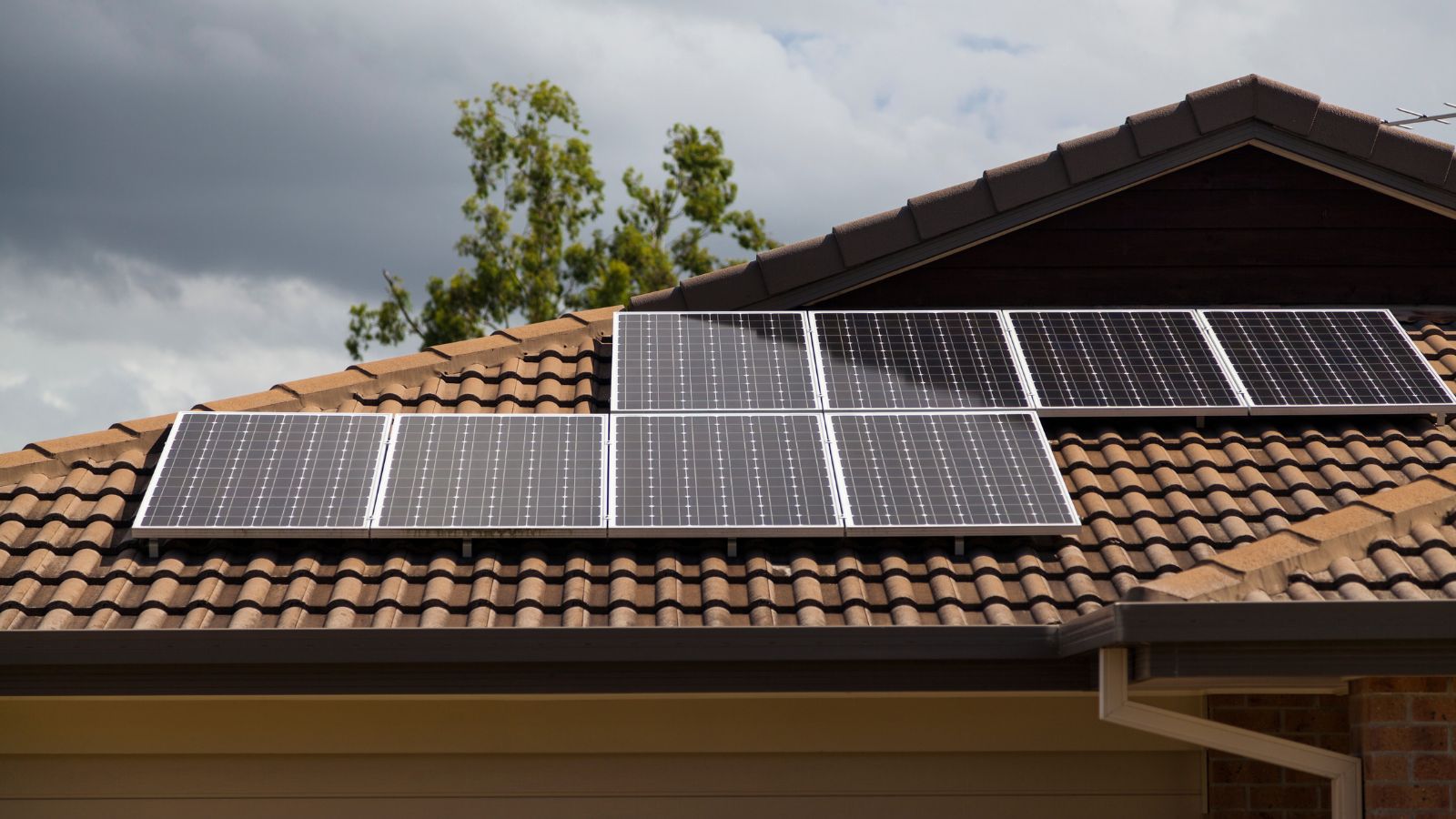
Our final recommendation is to invest in renewable energy systems such as solar water heating and a solar PV system.
Both of these offer incredible reductions on non-renewable energy consumption and will boost your chances of reaching that A-rating tenfold.
For instance, some sources suggest that a standard-sized solar PV system is capable of covering up to 70% of an average home’s annual electricity requirements.
Solar energy upgrades are also supported by SEAI grants.
At Whitebox, we make all of our housing developments as sustainable as possible as we aim to create smart communities for the future.
Here is a look at some of the standard sustainable features of our Droim an Oir housing development in Nenagh, Co. Tipperary.
We hope you enjoyed our article on BER ratings and how to improve them!
Why not check out some of our other articles next? You can also keep up to date with our latest news on LinkedIn.


